New paper: Robot bed thermo-mechanical therapy for back pain
Donnery Kyle, Pilloni Giuseppina, FallahRad Mohamad, Lee Kiwon, Han Byungyun, Park Soonhi, Kim Jihye, Charvet Leigh, Bikson Marom. (2026) Automated thermo-mechanical therapy for immediate relief in chronic non-specific lower back pain: a randomized controlled trial. Frontiers in Neuroergonomics. Volume 6 - 2025. DOI=10.3389/fnrgo.2025.1674928 PDF
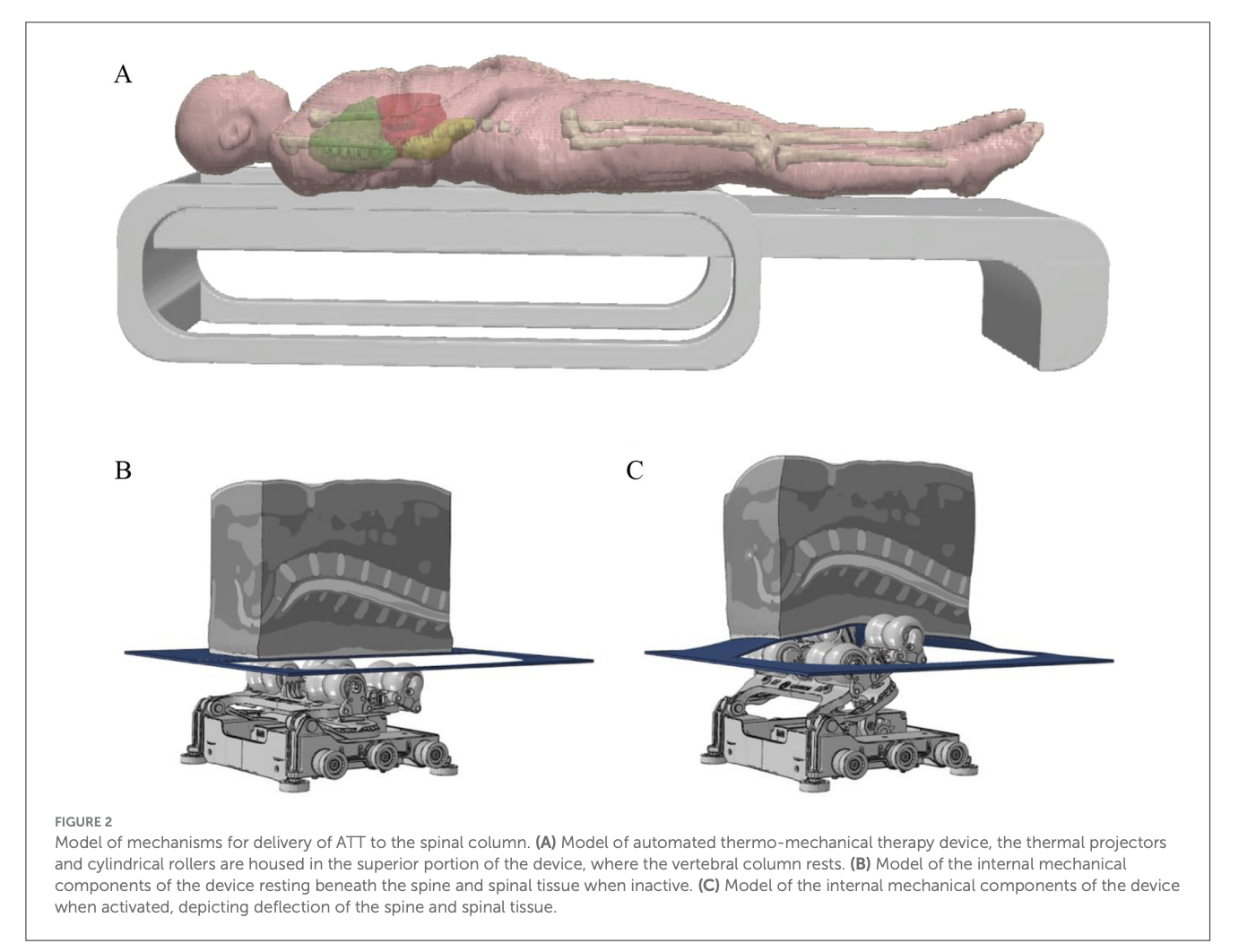
ABSTRACT: ObjectiveChronic non-specific lower back pain (cNSLBP) is a prevalent and disabling condition, imposing a substantial socioeconomic burden due to high healthcare costs and productivity losses, with limited accessible and effective long-term treatment options. Automated Thermo-mechanical Therapy (ATT) is a promising, non-drug intervention that leverages innovative technical advances to provide multimodal pain relief, offering accessibility and low-cost delivery. This study tested ATT for immediate pain relief in individuals with cNSLBP in a single-session, double-blind, randomized controlled trial.MethodsForty participants with cNSLBP were assigned to receive either active ATT (n = 20) or control ATT (n = 20) in a 40-min session with urn randomization. The active device applied heated cylindrical rollers along the spine, using far-infrared heat and mechanical tissue stimulation tailored to spinal alignment. In the control condition, the device used minimal mechanical therapy intensity without heat, targeting only the cervical area to avoid lower back therapeutic effects. Pre- and post-intervention assessments measured changes in pain intensity (primary outcome) via a 100-mm Visual Analog Scale for Pain (VAS-P100), alongside secondary outcomes assessing pain characteristics, anxiety, and functional mobility.ResultsThe active ATT group showed a significant reduction in pain on the VAS-P100, with an average decrease of 46.8%, compared to 17.0% in the control group. Participants in the active group also reported significantly greater subjective pain relief (p = 7.88e−05). Secondary outcomes demonstrated significant improvements in lumbar flexibility (Modified-Modified Schober Test, MMST) for the active ATT group compared to the control group (p = 0.0031). No adverse events were reported, and all participants tolerated the intervention well.ConclusionsA single session of ATT provides immediate, significant pain relief in individuals with cNSLBP, supporting its potential as a safe, non-invasive option for managing chronic back pain. Future studies should examine the long-term benefits of repeated ATT sessions and explore mechanistic insights into thermo-mechanical stimulation's effects on pain and function.Clinical Trial RegistrationClinicalTrials.gov, identifier: NCT06769321.